
Will a 2027 Kia Sorento PHEV Still Save Fuel on Long Trips?
September 23 2026,
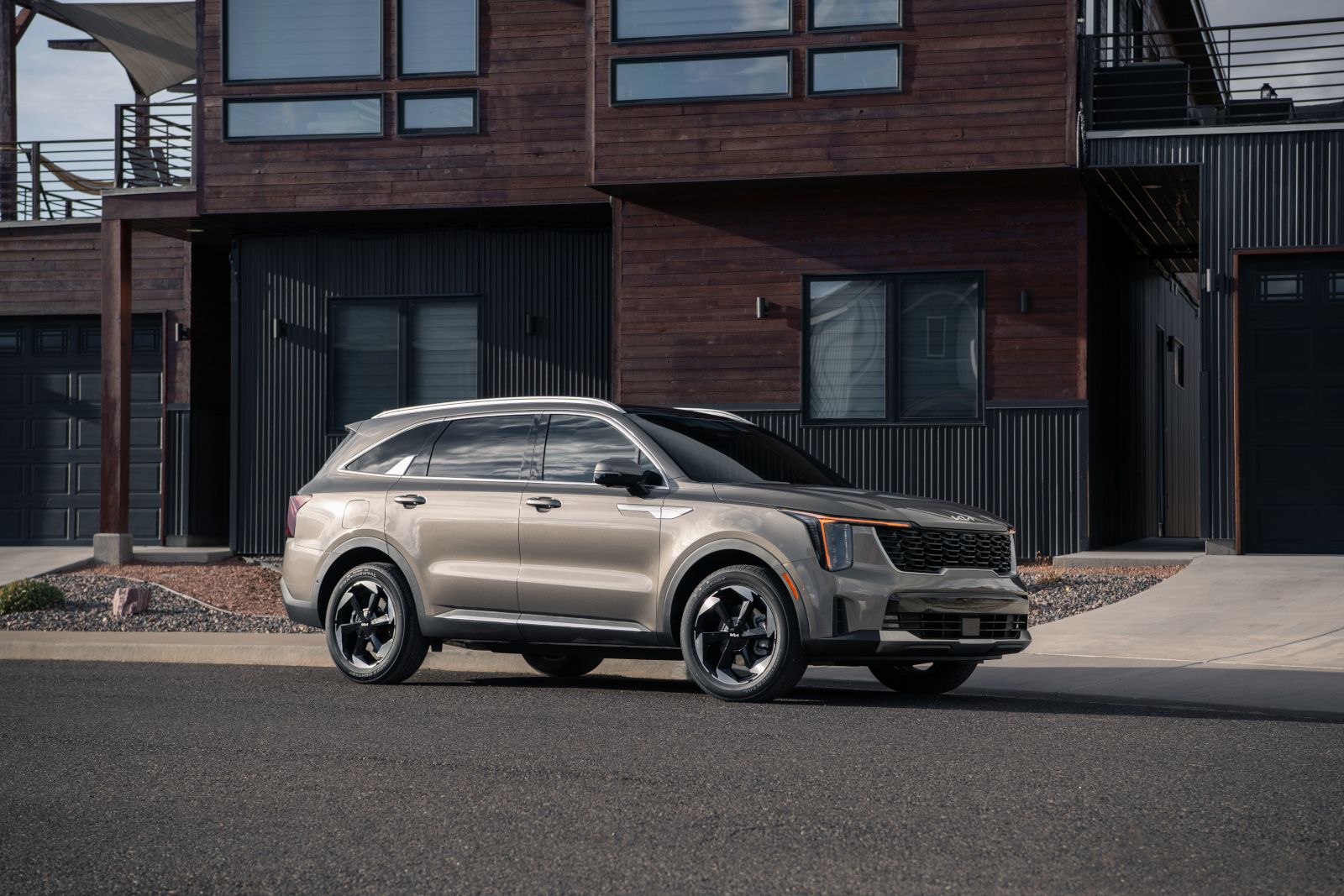
A plug-in hybrid sounds great for errands and short commutes, but the real question for Nova Scotia drivers is what happens once a trip stretches past the city limits. Does the battery still matter on the highway, or are you just hauling extra weight for nothing?
This FAQ walks through how the 2027 Sorento PHEV behaves once the battery runs low, when charging habits actually matter, and which driver profile gets the most out of the plug before you decide between it and a standard hybrid.
How Does the Sorento PHEV Handle Highway Trips Once the Battery Runs Low?
The Sorento PHEV pairs a 1.6 L turbocharged four-cylinder with a 13.8 kWh battery, producing 268 hp and 270 lb-ft combined. Its 55 km of electric range covers commuting and errands, but on a longer trip the battery depletes early and the gasoline engine takes over as the main energy source for the rest of the drive.
Once that happens, the Sorento PHEV runs like a self-charging hybrid: the engine and electric motor work together, but the battery no longer starts each drive full. In gasoline-only operation, it’s rated at 6.9 L/100 km combined. That figure reflects sustained highway driving, passing manoeuvres, and steady cruising, the real test of long-trip fuel economy once the plug-in advantage is gone.
Does Charging Habit Change the Fuel Savings?
Yes, more than most drivers expect. A plug-in hybrid’s efficiency advantage is strongest when most trips start with a charged battery. Skip the plug regularly, and the Sorento PHEV spends more of its driving in gasoline-only mode, closer to what any hybrid delivers without ever needing an outlet.
This is the core difference between a short daily commute and a multi-day road trip. A commute under 55 km can run mostly on electric power if charged overnight. A cross-province drive depletes the battery within the first hour, after which every additional kilometre relies on the 6.9 L/100 km gasoline figure.
On a multi-day journey, charging stops can meaningfully affect total fuel use. A driver who plugs in overnight at a hotel or stops for a top-up during a longer break resets some electric range before continuing; a driver who never stops to charge burns gasoline for the entire trip after the first depletion.
What Actually Affects Fuel Use More Than the Headline Number?
The 6.9 L/100 km figure is a baseline, not a guarantee. Route length, speed, weather, passenger load, and cargo all move the real-world number more than the label does. A Sorento PHEV loaded with passengers and gear, driven at highway speed against wind and cold, will use more fuel than the same vehicle driven solo in mild conditions.
This matters for trip planning across Nova Scotia, where route lengths vary widely and weather can shift quickly. The battery and electric motor help most on lower-speed, stop-and-go segments; sustained highway cruising is where the combustion engine, and its rated fuel economy, does most of the work.
How Often Do I Need to Plug In to Make This Worthwhile?
Regular charging matters more for a PHEV’s savings than it does for a conventional hybrid, which never needs a plug and always returns its rated fuel economy regardless of habits. For the Sorento PHEV, an overnight top-up on a Level 2 home charger takes about 3.8 hours and restores the full 55 km of electric range.
A driver with a dependable home charging routine, a garage, driveway, or dedicated outlet, gets the most value from this powertrain. Without that routine, the plug-in advantage shrinks and the ownership experience starts to resemble a standard hybrid that simply cost more to buy.
Is Charging Convenient for Every Driver?

Not automatically. Apartment dwellers, renters without a dedicated spot, or anyone relying on on-street parking may not have consistent access to a plug. Without that access, the Sorento PHEV’s electric range goes largely unused, and the fuel-saving case weakens considerably.
Before committing to the plug-in version, it’s worth being honest about whether a charging routine is realistic day to day, not just occasionally.
What About Seating and Cargo for Family Trips?
The Sorento PHEV keeps the three-row layout, with cargo volume of 2,139 L behind the front seats, 1,274 L behind the second row, and 357 L behind the third row when all seats are in use. That flexibility supports both grocery runs and loaded road trips, and it doesn’t change based on how often the battery gets charged.
The tradeoff for a three-row shopper is straightforward: the PHEV adds electrified efficiency and quicker response from its 268 hp powertrain, but it asks for a charging habit in return. A conventional hybrid trim asks for nothing extra and simply refuels at the pump.
PHEV or Conventional Hybrid: Which Fits Better?
The Sorento Hybrid, by comparison, uses the same 1.6 L engine layout with 227 hp and 258 lb-ft, rated at 7.0 L/100 km combined, and never needs to be plugged in. Its efficiency is fixed and predictable trip after trip.
The PHEV’s 6.9 L/100 km gasoline-only figure is close to the standard hybrid’s rating, which means the real gap between the two only opens up when the battery is actually being used. Charge often, and the PHEV pulls ahead on real-world fuel spend thanks to those electric-only kilometres. Charge rarely, and the two are nearly interchangeable on the road, with the PHEV carrying a larger battery and higher output as its main differentiators.
Quick-Answer Summary
- Electric range: 55 km, best suited to commuting and errands
- Gasoline-only rating: 6.9 L/100 km combined, the number that governs long highway stretches
- Charging time: about 3.8 hours on a 240V connection
- Best fit: drivers with reliable home charging and mixed local/highway use
- Less suited: drivers without dependable charging access or those covering mostly uninterrupted highway distance
Which Driver Should Choose the Sorento PHEV?
A commuter with a home charger and a mix of local errands and highway stretches gets consistent value from the plug-in’s electric range and 268 hp output. A family that splits driving between short trips and longer road trips can lean on electric power for the everyday portion and let the gasoline engine handle the rest.
Drivers who rarely have access to a plug, or whose routine is mostly long, uninterrupted highway driving, may find the standard Sorento Hybrid a simpler match. It delivers a similar gasoline-mode number without asking for any change in habit.
Deciding on the Right Sorento for Nova Scotia Driving
The 2027 Sorento PHEV rewards drivers who can charge consistently and use its 55 km of electric range for daily driving, while still offering three-row seating and cargo flexibility for bigger trips. Its real-world fuel savings depend on habit as much as the powertrain itself.
Visit Bridgewater Kia in Hebbville to review current Sorento PHEV trim options, ask about home charging setups, and find out which Sorento powertrain matches your typical driving pattern.
To learn more about the 2026 Kia Sorento PHEV, visit Kia.ca