

How Variablegrid’s Energy Management System Decides How Much Power Your Charger Gets
October 06 2026,
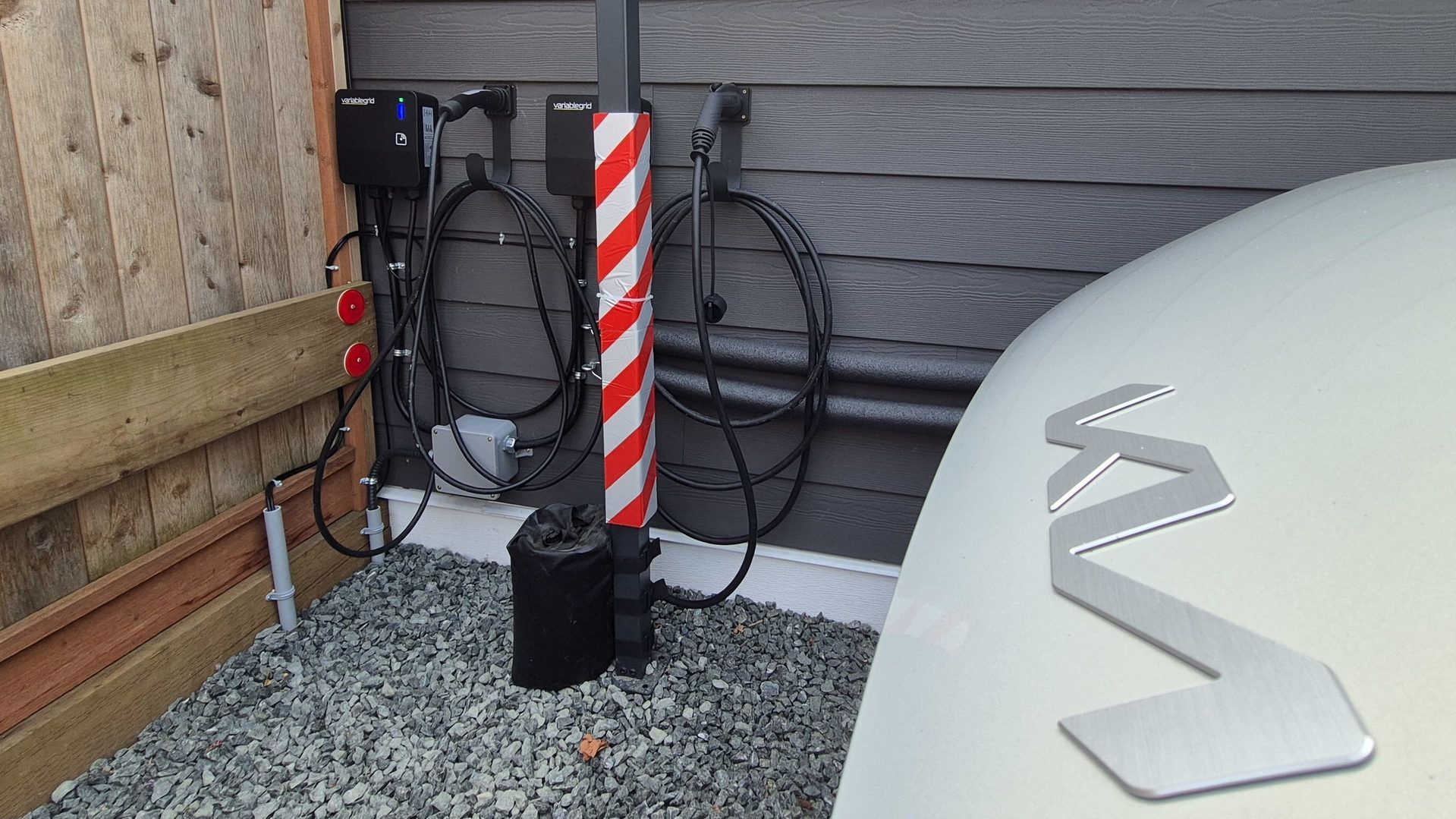
Home charging is the question that stalls a lot of EV shoppers in Nova Scotia. Many worry the electrical panel can’t handle a Level 2 charger without a costly upgrade.
Kia’s Variablegrid Energy Management System answers that worry directly. Here is what it does, how it works, and who gains the most.
What the Variablegrid Energy Management System Is

The Variablegrid Energy Management System (EMS) is a controller that works with a home Level 2 charger. Variablegrid Adaptive Power Inc., a Canadian energy technology company, built it using patented adaptive load management technology.
Kia calls it a traffic controller for your home’s electricity. It sends the charger whatever power the house can spare, so the existing electrical service is the only supply you need.
The Kia bundle pairs the RS48 Level 2 charger with the EV EMS controller. The charger is a 48 A unit with a 25 ft cable and a weather resistant enclosure suitable for indoor or outdoor installation. It comes with either a J1772 or a NACS connector.
How It Decides How Much Power Your Charger Gets
The system watches your home’s energy use at all times. It does not simply switch charging on or off. It adjusts the charger’s power in small steps.
- When household demand drops, charging ramps up.
- When appliances turn on, charging scales back.
- Adjustments happen in 1-amp increments.
That means charging speed can change during a single session as appliances start and stop. The goal is the fastest charge possible without overloading the home’s existing capacity.
The EMS adds just 10-15 minutes to a typical charger install. The charger itself is hardwired with an ethernet connection, so you can set charging schedules for off-peak rates, view real-time energy consumption and control the charger remotely.
Why It Matters for Home Charging in Nova Scotia
Older homes are the main reason this system exists. Kia’s brochure notes that over half of homes in Canada can’t support Level 2 charging without expensive upgrades. Variablegrid targets exactly that gap, so panel upgrades and the wait for utility approval are removed from the process.
You still go through normal permitting and installation, using your existing electrical capacity. A qualified electrician handles that work.
The bundle also simplifies the money side. You get discounted pricing compared with buying the components separately, and you can add the charging hardware to your Kia financing. One vendor handles support for the whole setup.
Variablegrid Plus adds a reward on top. With a 3-year subscription and a qualifying Variablegrid charger, you earn $0.10 per kWh on at-home charging. The funds can be withdrawn from your Variablegrid account once they reach $50. Enrollment happens at an EV-certified Kia dealership.
Who Benefits Most From Adaptive Home Charging

This setup suits owners of older homes where the panel has little spare capacity. It also suits shoppers who want Level 2 charging without a delay for utility approval or electrical work.
It fits buyers who prefer to roll the charger into their vehicle financing rather than pay separately. And it suits drivers who put on steady kilometres, since the per kWh reward grows with use. Kia’s own example is an EV4 driven 20,000 km a year, which could earn up to $360 paid out yearly.
Plan Your Home Charging Setup With Kia
Variablegrid’s EMS lets a home share its existing power with a 48 A Level 2 charger, adjusting in 1-amp steps as the household’s demand changes. Paired with the RS48 charger, it makes Level 2 charging realistic for homes that once looked out of reach.
Visit Bridgewater Kia in Hebbville to talk through the Variablegrid charger bundle and Variablegrid Plus enrollment. Bring your questions about your Kia EV and your home, and plan the charging setup that fits.
To learn more about Variable Grid Plus, visit Kia.ca